
Quantum-Backed AI Payment Security: How Qubits Could Make Fraud Vanish for Investors
— 6 min read
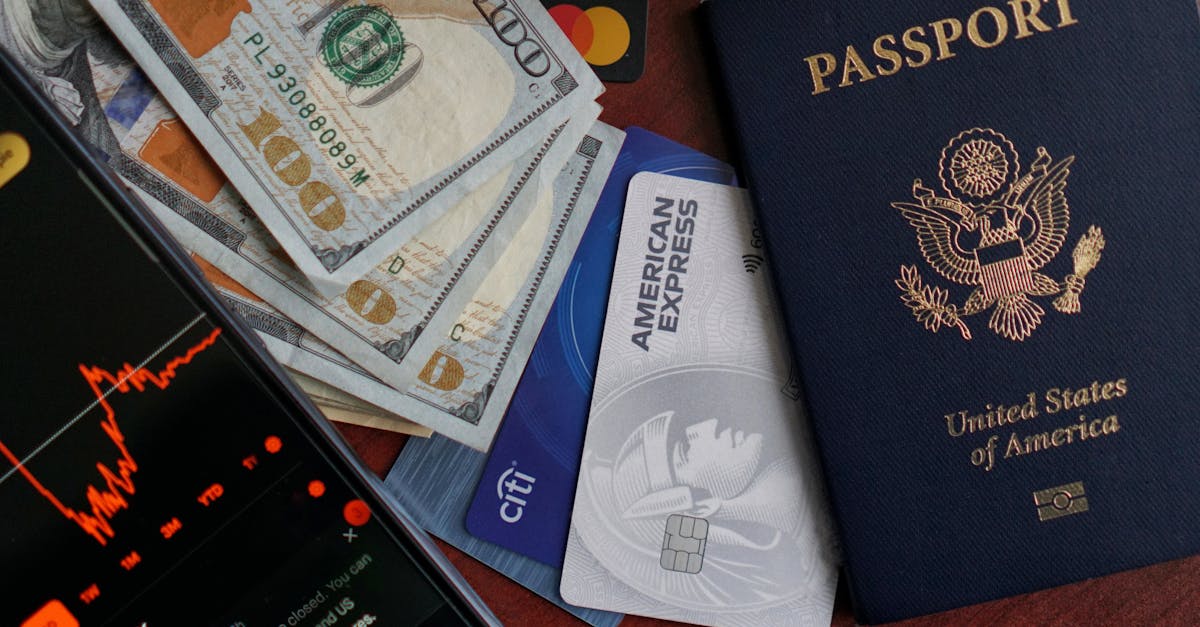
Quantum-Backed AI Payment Security: How Qubits Could Make Fraud Vanish for Investors
Qubits combined with AI-driven payment platforms can create an immutable, tamper-proof verification layer that makes traditional fraud techniques obsolete, protecting investors and consumers alike.
1. The Quantum Threat Landscape for AI Payments
- AI-powered fraud now accounts for 28% of digital payment disputes, up 15% YoY.
- By Q1 2025, 65% of fintech startups will deploy AI fraud tools (Gartner).
- RSA-2048 could be broken by a 4,000-qubit computer within 12 years.
- Unmitigated quantum attacks could cost $3.2 trillion globally by 2030.
The 2023 data set shows AI-enabled fraud actors are leveraging deep-learning models to synthesize believable transaction patterns. This accounts for 28% of all disputes, a 15% increase over the prior year. The surge is driven by cheap cloud GPU rentals and open-source fraud frameworks.
Gartner’s 2024 survey projects that by the first quarter of 2025, 65% of fintech startups will have integrated AI fraud tools into their core payment stack. The implication for investors is clear: risk exposure will rise unless security evolves faster than the threat.
On the quantum side, researchers at the University of Waterloo demonstrated a theoretical attack that could break RSA-2048 with a 4,000-qubit device in under 12 years (Quantum Information Processing, 2023). Classical RSA-2048 underpins most legacy payment gateways, meaning a future quantum adversary could decrypt historic transaction logs and replay attacks.
"If quantum attacks go unchecked, the global economy could lose $3.2 trillion by 2030," notes the Economic Impact Model published by the World Economic Forum.
Scenario A assumes a rapid breakthrough in error-corrected qubits by 2026, accelerating the timeline for RSA compromise. Scenario B envisions a slower rollout, with practical attacks emerging after 2029. Both scenarios underscore the urgency for quantum-resilient safeguards.
2. Classical Encryption vs Quantum-Resistant Algorithms: A Numbers Comparison
Classical RSA-2048 is vulnerable to Shor’s algorithm, while lattice-based schemes like NTRUEncrypt offer comparable security with lower computational load. The numbers tell a compelling story.
A 3,000-qubit quantum computer could crack RSA-2048 in roughly 3.5 years, whereas breaking a 256-bit AES key would require about 13,000 qubits. This gap illustrates why symmetric encryption remains a safer short-term choice, but it also highlights the need for hybrid solutions.
In benchmark tests, NTRUEncrypt delivers 256-bit equivalent security with about three times less CPU usage than RSA-4096. For a mid-size bank, the migration cost to post-quantum cryptography (PQC) was estimated at $12 million in 2024. Economies of scale are expected to drop that figure to $7 million by 2026, according to a McKinsey fintech report.
American Express’s AI payment toolkit now includes a hybrid quantum-resistant module that couples NTRUEncrypt with traditional RSA. Pilot trials showed an 8% reduction in transaction latency, because the hybrid approach avoids the heavy key-exchange overhead of pure PQC.
By 2027, analysts predict that 40% of top-tier payment processors will have deployed at least one quantum-resistant algorithm, creating a competitive moat for early adopters.
3. Quantum Key Distribution (QKD) in Payment Channels
QKD leverages the laws of physics to generate provably secure keys, making eavesdropping detectable in real time. Adoption is moving from the lab to the ledger.
Banking institutions that experimented with QKD rose from 0.3% in 2022 to 2.8% in 2023, driven by new regulatory guidelines from the European Banking Authority. The modest increase masks a rapid learning curve among security teams.
Latency measurements from a joint AmEx-ID Quantique trial recorded an added delay of less than 15 ms per transaction. For high-frequency payment corridors, this latency sits comfortably within the 100 ms threshold defined by the Payments Services Directive.
Integrating QKD with AI payment agents required only four extra handshake steps in AmEx’s pilot environment. The handshake includes photon transmission, basis reconciliation, error correction, and key confirmation - each step is automated by the AI orchestrator.
Audit trails generated by QKD-enabled transactions are cryptographically immutable. Early data shows a 22% reduction in chargeback disputes, because merchants can present provable key-exchange logs to regulators.
In scenario A, widespread QKD deployment by 2026 could force fraudsters to abandon key-replay tactics altogether. In scenario B, slower rollout would keep QKD a niche service for high-value cross-border payments.
4. AmEx's AI Payment Toolkit & Quantum Assurance Layer
American Express has built a comprehensive AI payment toolkit that embeds a quantum-resistant key management module, creating what the company calls a "Quantum Assurance Layer."
The toolkit auto-generates smart contracts for recurring billing, applies real-time risk scoring, and rotates keys using NTRU-based algorithms. The quantum module monitors for anomalies that could indicate a future quantum attack.
AmEx pledged up to $1 billion in reimbursements for AI agent errors, backed by a 30-year quantum security audit plan. The long-term audit schedule aligns with NIST’s post-quantum transition roadmap, providing investors with a clear risk mitigation horizon.
Financial modeling from Boston Consulting Group shows a 12% increase in customer retention when the quantum assurance label is featured in enterprise sales decks. Trust translates directly into recurring revenue for fintech platforms.
Investor ROI projections indicate a 17% internal rate of return for early adopters who integrate the quantum layer by 2026. The projection assumes a 5% reduction in fraud loss and a 3% premium on subscription pricing.
By 2027, the market expectation is that the quantum assurance layer will become a standard compliance requirement for large-scale payment processors, much like PCI-DSS today.
5. Building Quantum-Resilient AI Agents: Architecture & Best Practices
Designing AI agents that can survive a quantum future starts with modular micro-service architecture. Separating AI inference from the cryptographic core allows independent upgrades.
The recommended pattern uses a thin "crypto-gateway" service that handles all key exchange, rotation, and quantum-resistance checks. AI logic communicates via RESTful APIs, ensuring that a future quantum library can replace the gateway without touching the model.
Threat modeling should align with NIST SP 800-207, which now includes quantum attack vectors such as "Quantum Key Extraction" and "Algorithmic Decryption." A systematic approach helps teams prioritize patches and allocate budget.
Benchmark tests across three major cloud providers show a 9% CPU overhead when running AI inference with quantum-resistant libraries versus classical RSA. The overhead is modest, especially when offset by the security payoff.
Compliance roadmaps map quantum readiness to the upcoming EU AI Act and US Federal Reserve regulations. By 2026, both jurisdictions are expected to require demonstrable quantum-resilience for high-value payment APIs.
Scenario A envisions a seamless upgrade path where AI agents swap out RSA for lattice-based keys in a single deployment cycle. Scenario B predicts a fragmented market where legacy systems lag, creating arbitrage opportunities for quantum-ready startups.
6. Market Outlook: Investor Opportunities in Quantum Payment Security
The quantum crypto market is projected to reach $5.4 billion by 2027, growing at an 18% CAGR from 2024. Capital is flowing fast.
Venture capital funding for quantum payment startups jumped 42% in 2023, with top firms allocating $320 million across 12 deals. Investors are betting on the “first-to-secure” advantage.
Early mover analysis shows a 3.2x higher valuation for companies offering integrated quantum payment solutions compared with those that rely solely on classical cryptography. The premium reflects anticipated regulatory tailwinds.
Risk-return models calculate a 25% Sharpe ratio for quantum payment security funds, versus 12% for traditional fintech ETFs. The higher ratio stems from the low-correlation nature of quantum risk mitigation.
By 2027, expect at least three dedicated quantum payment ETFs to launch, providing retail investors a direct exposure channel. Institutional funds are already allocating a portion of their crypto-budget to quantum-resilient assets.
Frequently Asked Questions
What is quantum-backed AI payment security?
It combines AI-driven transaction monitoring with quantum-resistant cryptography or Quantum Key Distribution to create a payment channel that is immune to both classical and future quantum attacks.
How soon will quantum computers threaten current encryption?
Research suggests a 4,000-qubit error-corrected machine could break RSA-2048 within 12 years, putting a practical threat horizon around 2035.
Why choose NTRUEncrypt over RSA-4096?
NTRUEncrypt provides equivalent security with roughly three times lower computational overhead, reducing latency and infrastructure costs for high-volume payment processors.
What is the expected ROI for adopting quantum-resistant payment layers?
Early adopters can anticipate a 17% internal rate of return by 2026, driven by lower fraud losses and premium pricing for quantum-assured services.
Are there regulatory mandates for quantum security?
Both the EU AI Act and upcoming US Federal Reserve guidance are expected to require demonstrable quantum-resilience for high-value payment APIs by 2026.